Early summer weather in Olympia, WA, quickly changes exterior property surfaces. Heavy spring rains leave dense biological layers on residential roofs. By June, rising temperatures begin to dry out these thick biological mats. Plant root systems shrink and pull on asphalt shingles.
This upward pulling action breaks the weather seal on the roof deck. Proper Olympia moss removal during this early phase stops expensive structural damage. Factual care now stops rapid decay during the hot months.
How Does Moss Destroy Roof Shingles?
Moss acts like a thick sponge that traps moisture against the roof, causing shingle edges to curl and loosening protective granules over time.
Constant moisture rots the wooden underlayment supporting the roof structure. Plant roots grow directly into the tiny spaces between asphalt strips, lifting the shingle edges. Wind easily catches these lifted edges during storms.
Exposed wood rots quickly when trapped under a wet blanket of organic matter. Detecting biological growth early saves the underlying roof deck from costly water damage.
Why Does June Weather Offer the Best Cleaning Window?
Rising June temperatures dry out patches of Hypnum and Dicranum mosses, making early summer the perfect biological window for surface-safe treatments to break structural root bonds.
The plants enter a state of dehydration during early summer. Applying a liquid treatment now forces the organism to soak up the commercial-grade solution.
The treatment quickly targets the root system, so roots lose their firm grip on asphalt surfaces. Breaking these structural bonds early prevents the organism from dropping spores. A proactive summer treatment keeps the roof deck completely clear.
What Are the Industry Standards for Roof Cleaning?
The Asphalt Roofing Manufacturers Association mandates low-pressure soft washing to clean shingles safely without damaging protective granules or voiding manufacturer warranties.
High-pressure washing blasts away the protective rocks covering the shingles. This mechanical force instantly destroys the material, leaving the homeowner paying for a full roof replacement out of pocket.
A soft wash system applies an industry-proven chemical blend at the exact pressure of a garden hose. This method protects shingle integrity while destroying the plant material. Proper low-pressure applications rely on professional chemistry rather than heavy mechanical force.
How Do Our Professional Soft Wash Systems Clean Roofs?
We protect delicate shingles from heavy physical damage by applying a professionally approved liquid solvent to the building’s surface using a low-pressure soft-washing technique.
Our field crews follow a strict protocol on every job:
- Technicians apply a professionally approved liquid solvent to the building surface.
- Low-pressure soft washing techniques distribute the mixture safely.
- This gentle solution removes heavy moss, black algae streaks, and thick grime.
- The non-abrasive approach clears the materials while preserving structural integrity.
- Trained crews use proper safety equipment to prevent property damage.
How Does Gutter Clearance Protect Local Foundations?
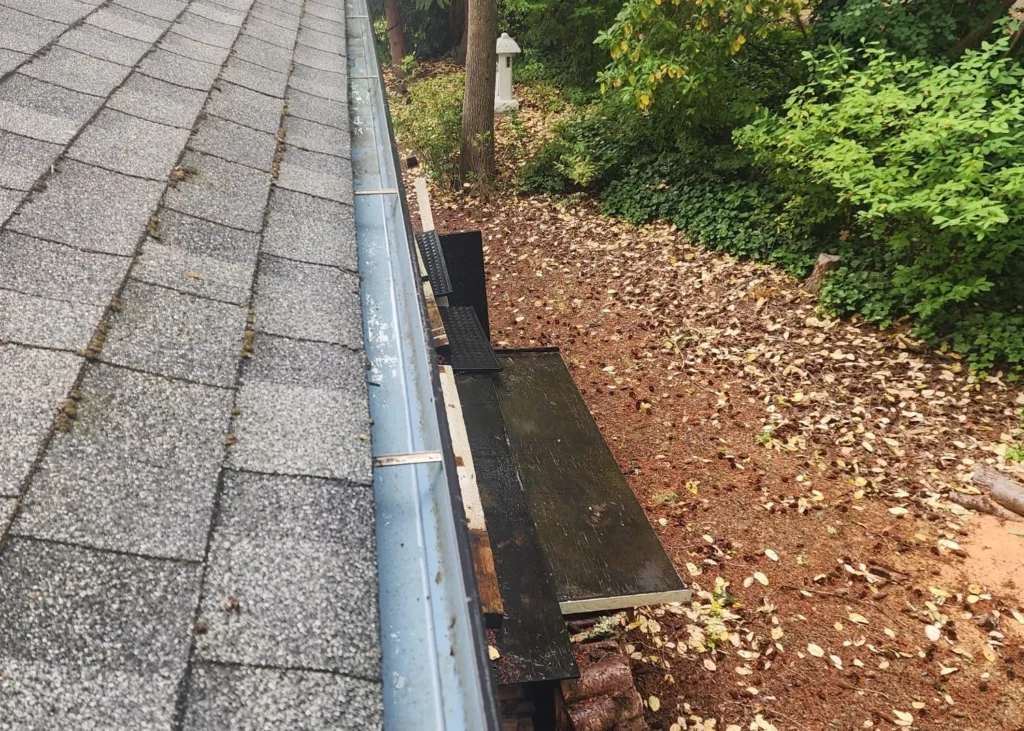
Dead organic debris slides down the roof pitch into gutters, causing blockages that force rainwater to spill over and crack concrete home foundations.
Blocked gutters in Lacey and Tumwater quickly overflow during heavy storms. This escaping water pours straight down against the lower edges of the property. Continuous puddles at the base cause concrete foundations to crack over time.
Keeping gutters clear directly protects the health of the entire structure. Proper clearing stops basement flooding during heavy fall storms.
What Tools Are Used in Professional Roof Maintenance?
Professional field technicians use commercial-grade spray tips and safety equipment to clear roof surfaces safely without causing structural damage.
Professional exterior cleaning relies on commercial-grade equipment to accurately measure pressure outputs. Commercial spray tips limit water pressure to safe levels. This low output safely mirrors a steady rain shower. Pump systems evenly distribute the cleaning mixture across large roof areas.
Workers use safety harnesses and anchor points when walking on steep roof pitches. Proper fall protection equipment stops serious accidents on slippery asphalt surfaces. Safe operational habits protect both the workers and the property.
How Do Homeowners Spot Warning Signs of Biological Roof Decay?
Property owners can look for dark streaks, thick green clumps, and curling shingle edges from the ground level to identify active structural decay.
Homeowners in Yelm and Olympia should look for visual clues of roof decay from the ground level. Dark black streaks running down the shingles point to an active algae colony. Algae feeds on the limestone filler inside the asphalt shingles. Patches of thick, damp clumps along the edges indicate deep root growth.
Curling shingle edges present a serious structural warning. Plants growing under the asphalt force the material to bend upward. Any visible wood decking means the shingle layer has completely failed. Spotting these visual signs early helps property managers stop complete roof failure.
Related Articles:
- The South Sound Soft-Wash Standard: How We Maintain Roofs for Tumwater Homeowners
- Keeping Your Yelm Roof Clear of Moss and Algae Damage
Secure Your Roof Before the Summer Heat
Regular roof maintenance requires following safe industry guidelines and careful timing. Scheduling proper low-pressure cleaning stops organic damage before it leads to full roof replacements. Protect your building materials from severe winter leaks by taking action during the dry summer months.
Secure your property structure today by booking a professional service for Olympia moss removal.